
Years Ago, On The Foothills Of The Himalaya, Kashmir III
3rd day, the Pahalgam hillbillies
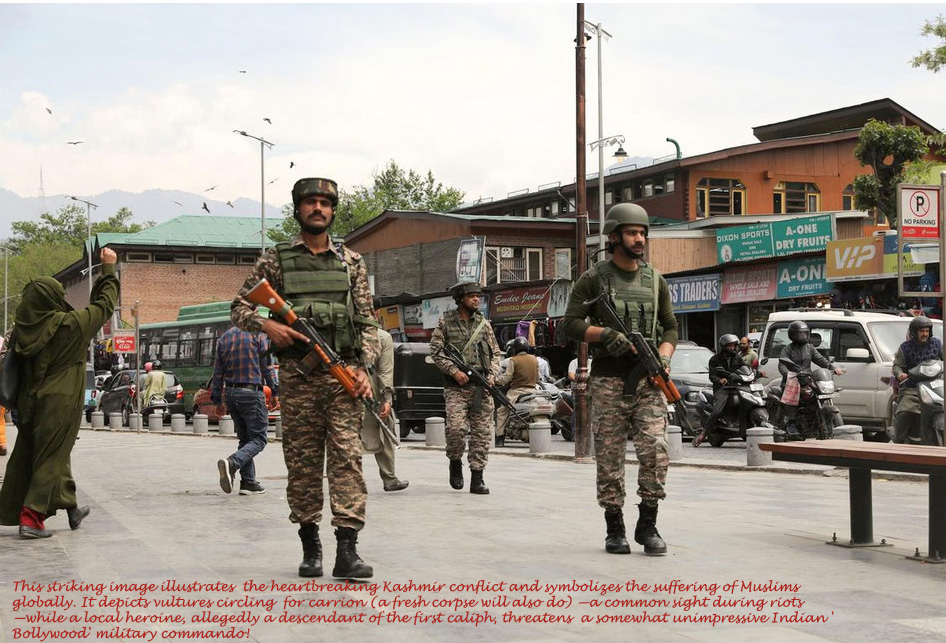
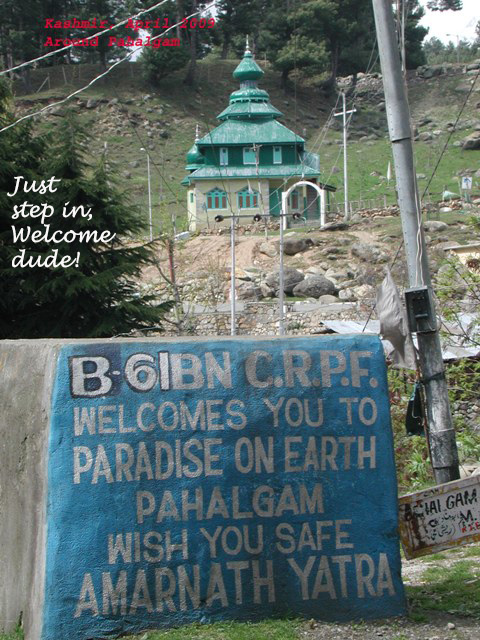
On the next and final day, Lothar hired a taxi for a four-hour drive to New Delhi. Along the way, he began to develop some Himalayan ambitions—he’s a die-hard romantic—while the more composed, scientific me simply (and somewhat vehemently) expressed a staunch 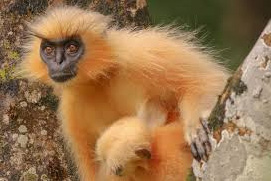 desire to meet some langurs. I quickly added “golden” to the list to smother in its crib a nasty remark from my companion. As a result of these distasteful requests, expressed by two fairly old, spoiled brats, we veered off the main road and ended up in Pahalgam—an astonishingly beautiful area that had been recently (2025) the site of a heroic or horrendous, (depending on who is relating) Muslim (terrorists or militants) attack.
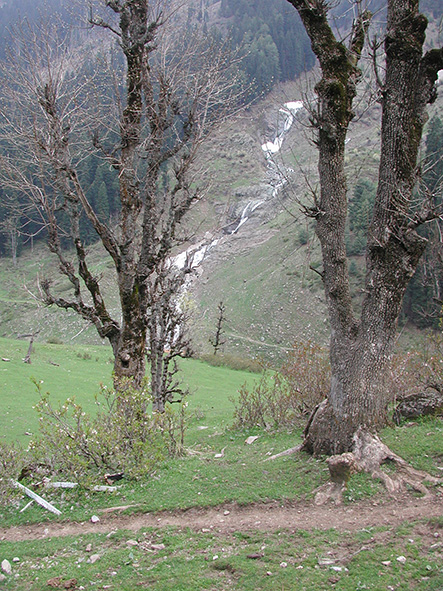
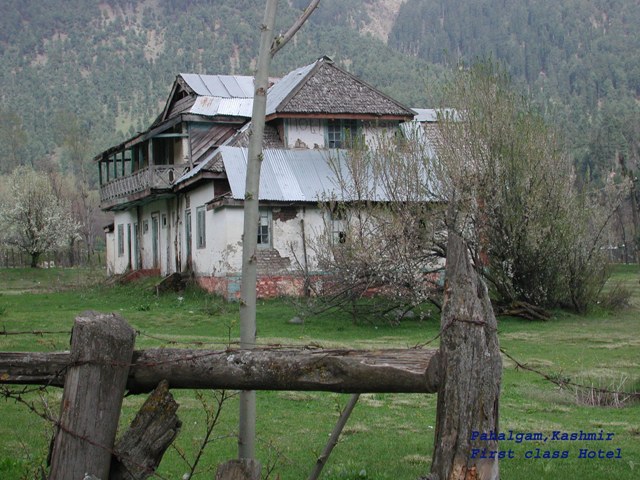
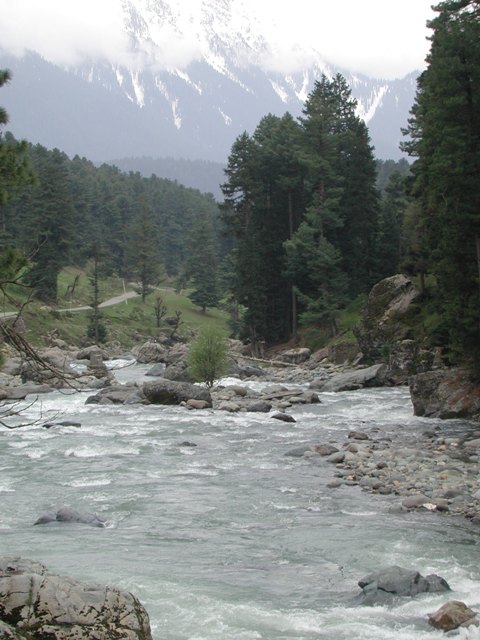
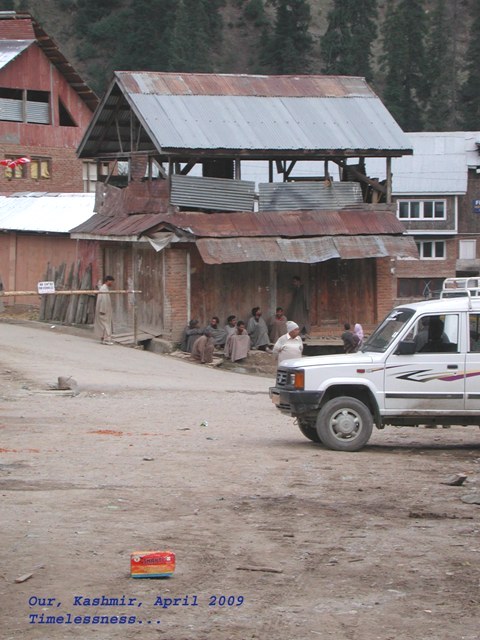
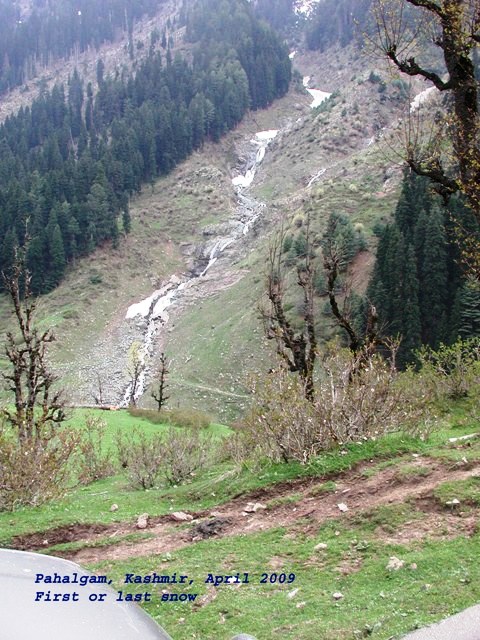
But as the Savior practically decreed, “Let the dead bury the dead,” let us turn our attention instead to the Pahalgam countryside, whose beauty rivals that of the Srinagar Valley. Both places belong to the 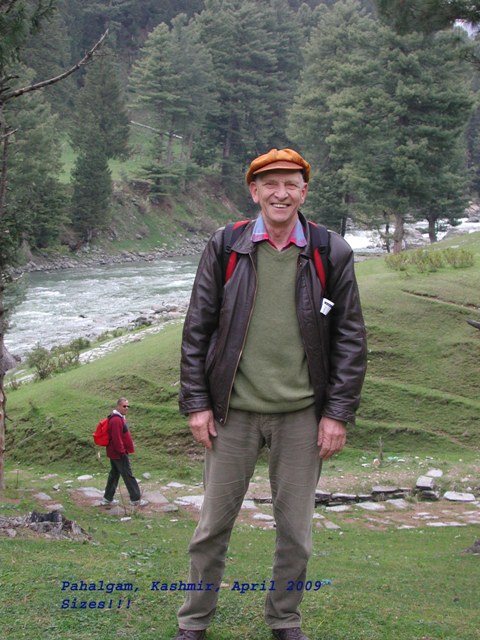 classic tourist postcard category—though, alas, nobody seems to send these touching tokens of affection to friends or relatives anymore. Perhaps the post has been hijacked by email, or perhaps affection itself is becoming rarer in our increasingly busy lives. Pahalgam, situated at an altitude of 2,025 meters, is only 400 meters higher than Srinagar, yet the two places feel worlds apart. Srinagar is an urban agglomeration built around a stupendous lake, which contributes to its subtropical climate. It lies on a flat, wide, and wet valley, has served as a summer capital for centuries, and is adorned with magnificent Mughal gardens and grand public works (mosques, palaces, forts). Pahalgam, by contrast, remains a rural hill station. It’s nestled in a landscape of steep slopes—not just hills, but true mountains—many often snow-capped and seemingly within arm’s reach. Nervous, foaming torrents leap from ledge to ledge as they tumble downhill. The air is fresh, fed by both the peaks and the surrounding forests, which together foster a temperate climate.Together, these two destinations feel like the two sides of a golden medal—the dream of any regular tourist Joe exploring Kashmir on a well-planned budget and itinerary. But further up begins another world: the realm of nomadic shepherds, wild bears, elusive musk deer, tense martial borders, and compulsive mountain climbers. Here, a sense of restraint is advised.
Early on, we stumbled upon a cricket bat factory. This 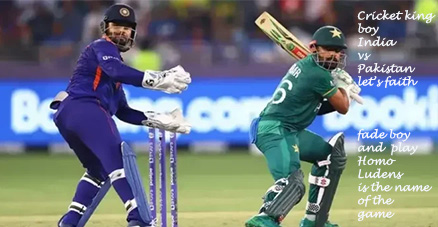 which gave us free rein to trade some twisted, sharp and ultimately jocular reflections on the depth and reach of English colonization—and the cultural imprint it left on native populations across different regions and groups. These days, colonization and cultural ‘impregnation’ seem to be in full reverse. Now, it’s the Brits who are feeling the heat. Taking the hit? What will come of it? The
  bookmakers aren’t taking bets just yet, but some wise guys say the writing’s already on the wall—not that I care.
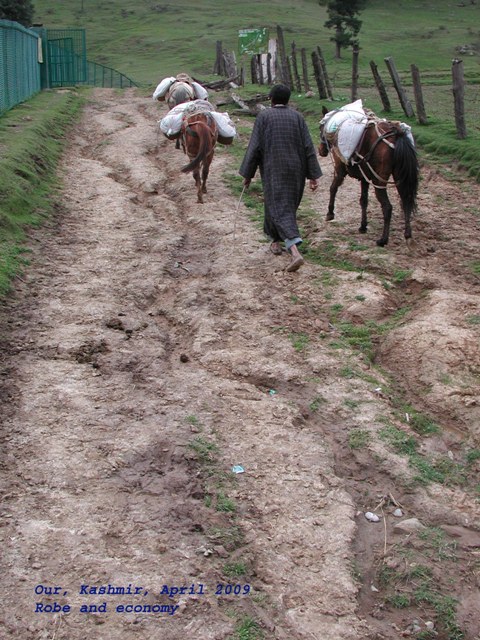
Our little detour took a sour turn. I bought some low-quality saffron, more out of exhaustion from the vendor’s endless lies than any real interest. Lothar tested a sample of the much-hyped local hashish and returned it with a sour face and grunts. Finally, we indulged in half an hour of horseback riding—an experience that managed to outdo, in grotesqueness and absurdity, almost anything we’d encountered in years of travel. It deserves elaboration. We were given two scrawny, bony, sickly-looking nags that barely managed to carry us—or themselves. The path we were meant to follow climbed steeply up a hill. Two weird, oddly dressed grooms dragged the pitiful creatures forward, pulling on their harnesses with visible despair. The rough path soon turned my backside into a regrettable piece of raw meat. I looked over at Lothar, who, despite 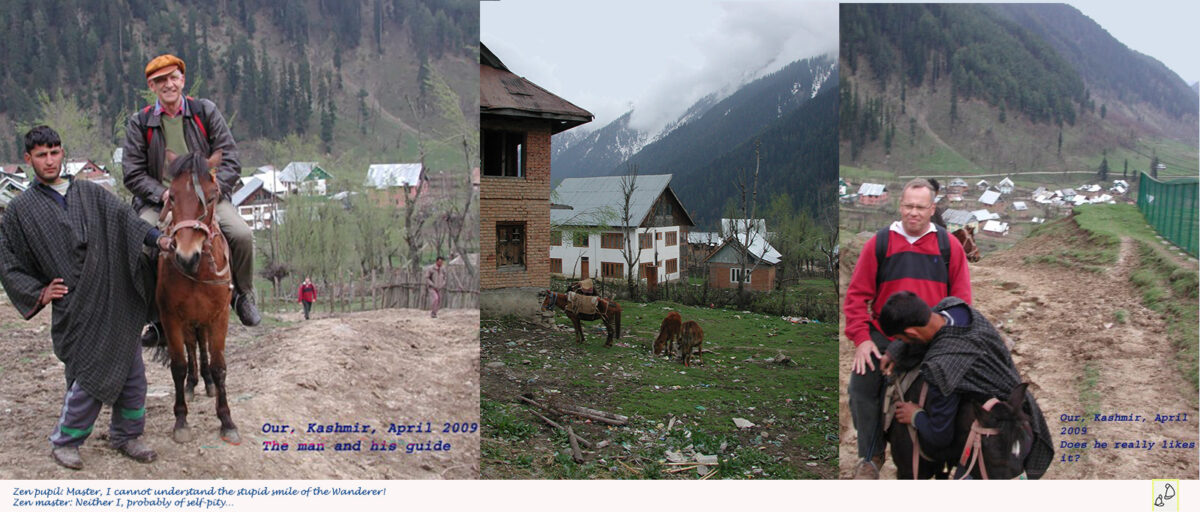 his much thicker natural cushion, appeared bored out of his mind. The photo above gives only a pale image of the degree of alienation of both animals and riders, while my groom particularly couldn’t care
less, thinking only of his future fashion model career. We promptly cut the misadventure short without asking for more and resumed our journey to New Delhi.
Wait a little bit, wait a little bit, my dear fellow, I do notlike the cavalier way you wrapped up the report. It may fit some derelict baba, some over-aged antediluvians on the border of senility, who have rejoined a deeply discounted group tour and are endlessly complaining, in a nasal tone, of missing their Big Mac or their bifteck avec frites. The litany never stops, in spite of the efforts of the phony traveling agency to provide them with some surrogates, you know what I mean. Pahalgam county, I said to myself, should have some rare scenic values and metaphysical appeals that dwarf the importance of the inept operators you met. As I sincerely scolded myself, it suddenly occurred to me that we were in the county of thousand rivulets, totally unpolluted, originating from the largest mountainous mass of ice and snow in the world, running joyfully and springily down the slope. An old Hindu belief claims that the drops of eternal life (Amrita) fallen eons
ago, during the battle between the Devas (gods ) and the Asuras (demons) into the immensely dirty Ganges River can provide a lucky worshiper with immortality if he runs into one in his ritual immersion. I can tell discretely to everybody, that one of the crystalline brooks from the Pahalgam county contains a fair amount of Amrita drops that can convert a regular tourist Joe into a demigod. Unfortunately, the evil Asuras are daily transfering the Amrita reserve from one rill to another, which reduces the devotee’s odds of encountering a holy drop to the same quota of the one who plunges in bacterial soup of the Holy Ganges at the mammoth Kumbh Mela taking place at Allahabad (now Prayagraj) every 12 years. I was, together with Lothar of course, one of the 70.000.000 participating devotees, and i have to avow, one of the few who forgot to plunge. and consequently didn’t got neither imortality nor infection. Should i come once again into Pahalgam county, during the terrorist-free season i will not miss the occasion to give a try. The bit of Gayatri Manta that will follow may contribute to keep the hope alive, at least for a while.
And now there is time to drive peacefully to Dehli, and maybe see some langurs on he way.
With a deep bow and a multitude of thanks, *
The Wanderer
**May I dare, revered patron angel to cast, on your free time, a kind gaze upon my friend, who despite being significantly younger, noticeably ages day after day as he is trying to catch me up?
16 years later, The Khanqah-e-Molla quandary
ADDENDUM
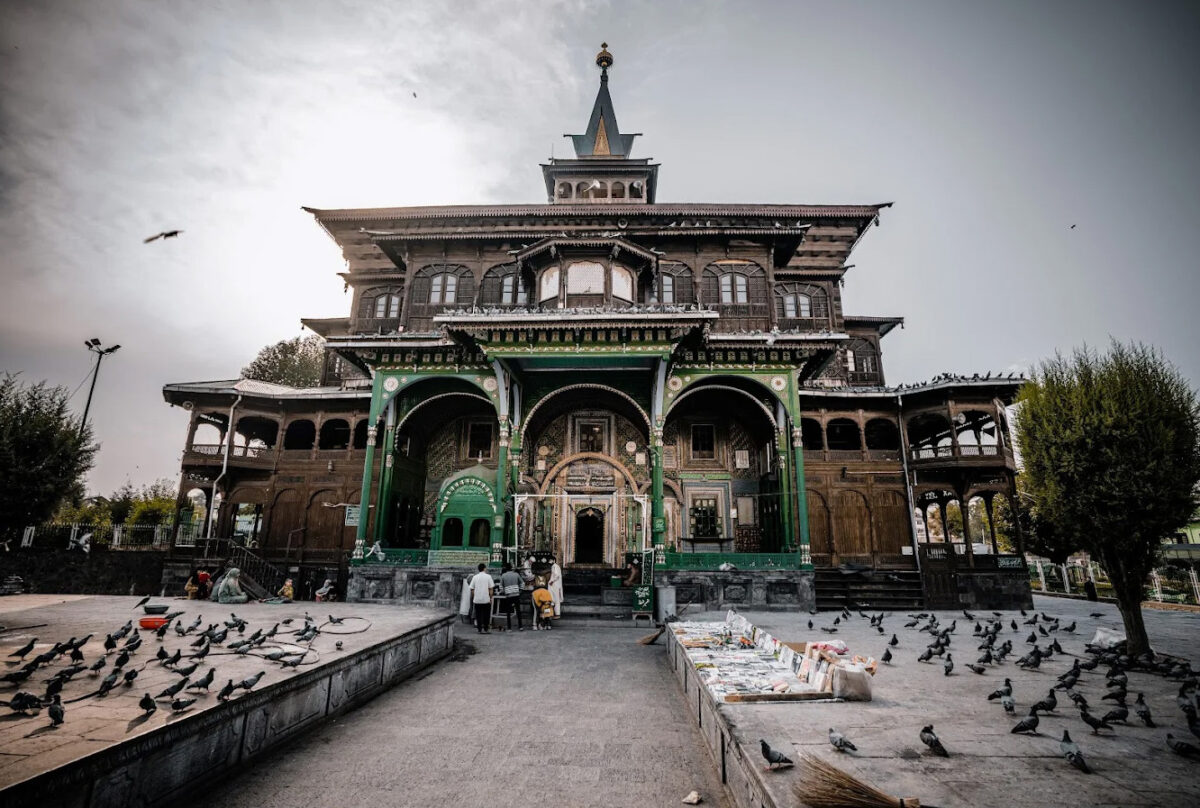
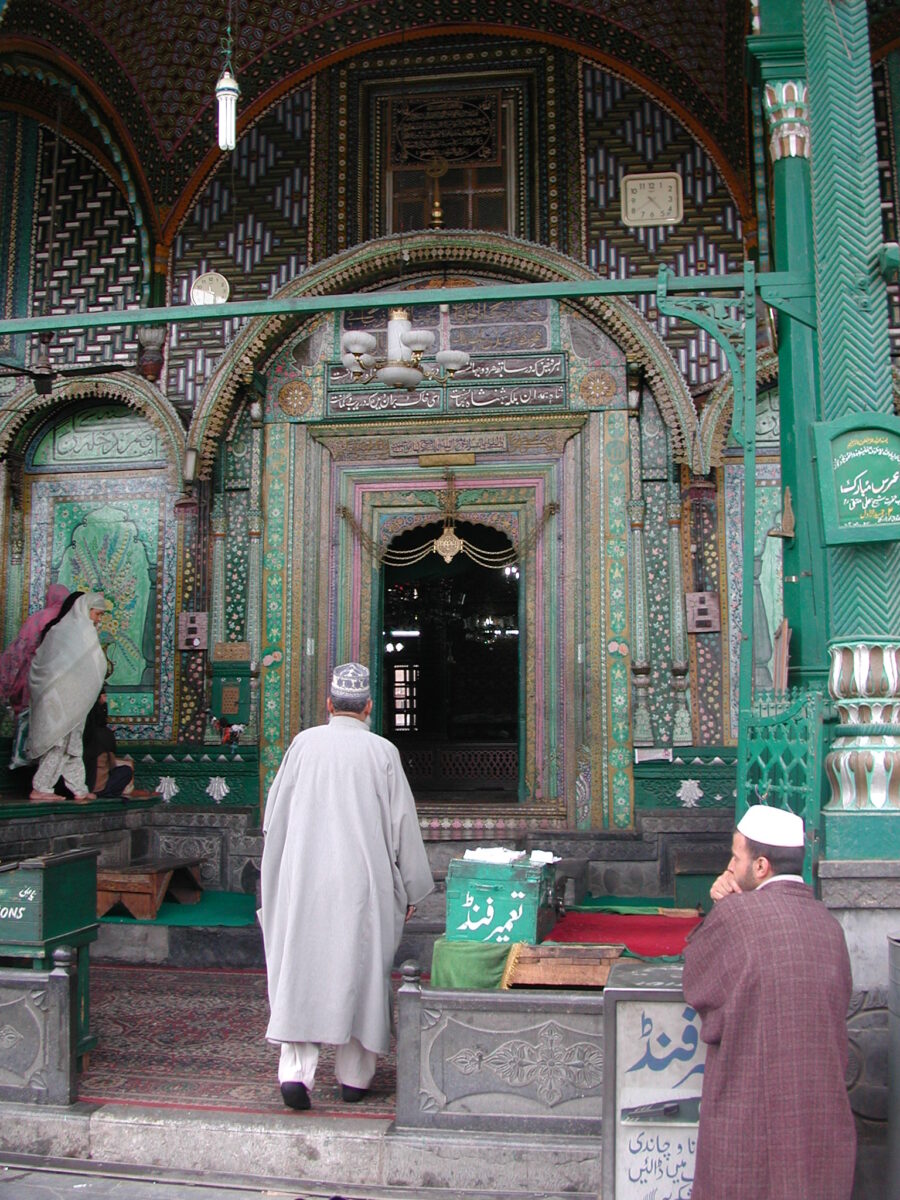
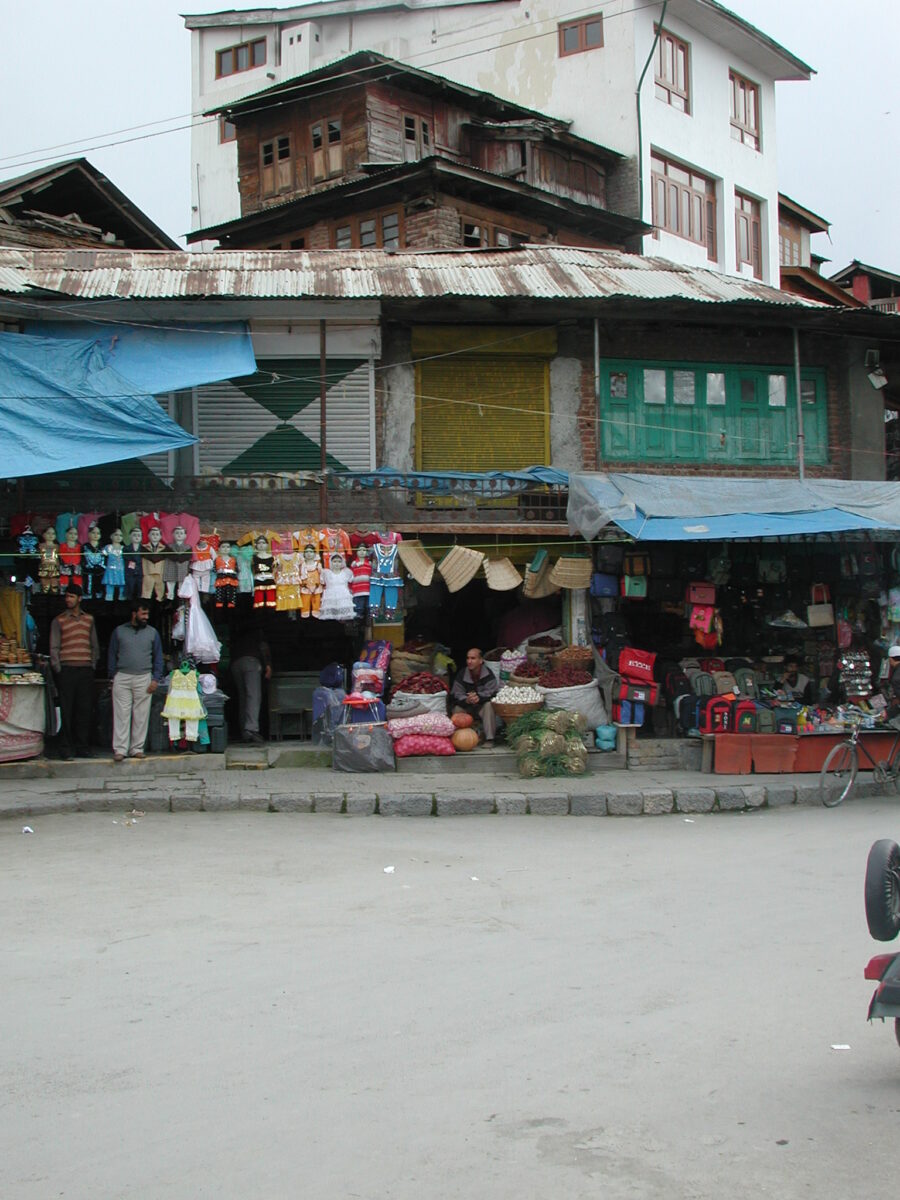
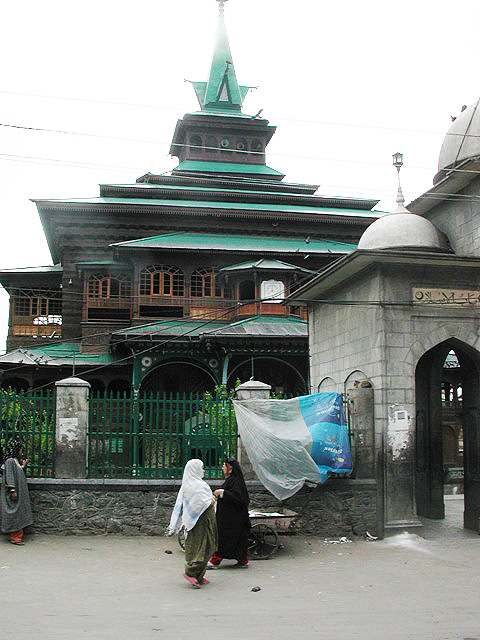
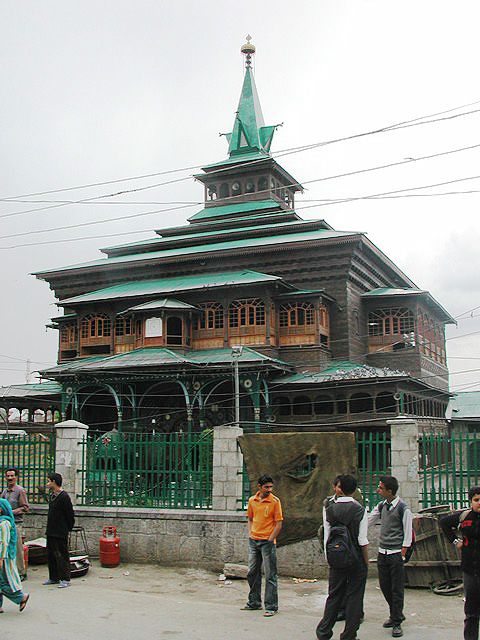
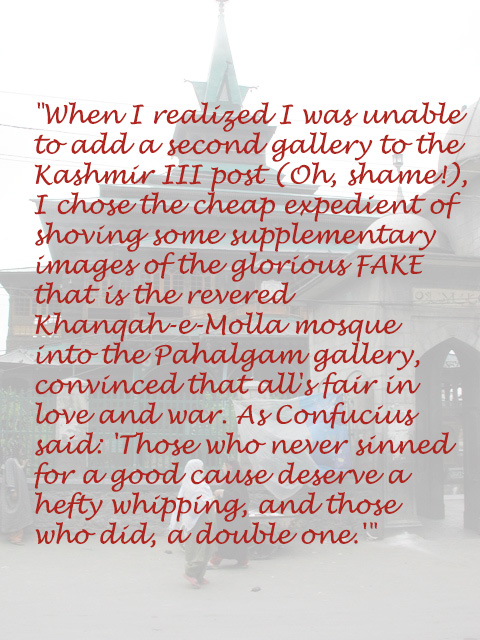
I will try to be as snappy as possible. Just as I was on the way to wrap up everything up with a deep sigh of relief and not little pride I realized with horror that we had physically and mentally missed a Kashmiri cultural-historical milestone of matchless importance: The Khanqah-e-Molla mosque. Within the rather rough transition, with far reaching consequances, from Hindu to Islam rule (the “invasive culture,” as it were) in the area, this shrine holds the priceless spot of primogeniture.It was the first to be raised in 1395 by Sultan Sikander and it functioned as the cradle of Islamic expansion within the Indian subcontinent. You can compare it to the Abbey of Vézelay, from where crusader cohorts marched to cleanse the Holy Land of infidels. It’s the same story but with infinitely less success for the Saivor’s fans while the Prophet’s believers are keeping going strong worldwide. Kismeth. I was already poised to accuse my childish companion of the mess and the missing of the architectural gem when I heard a well-known sarcastic growl: Do you want to look again at your photos caput vacuum (empty head)? Once again the Principal is saving me from stain and shame. Of course we were there. I offered a certain number of genuflections and bows and turned back to my task. The rest will come in whole sale mode. The shrine was raised in honor of a Sufi saint. An epitome of tolerance and ecumenism, the Sufi saint model, is lamentably much less prized today than the ‘militant’, if at all. After doing some reading and looking to some photos I understood why I was so pissed off thinking that we overlooked it. Of course we didn’t grasped its importance and unicity on the spot ! Aesthetic understanding is much more an issue of careful examination, comparison with similar statements and patient reflection than love at first sight. It sounds academic but it is true.
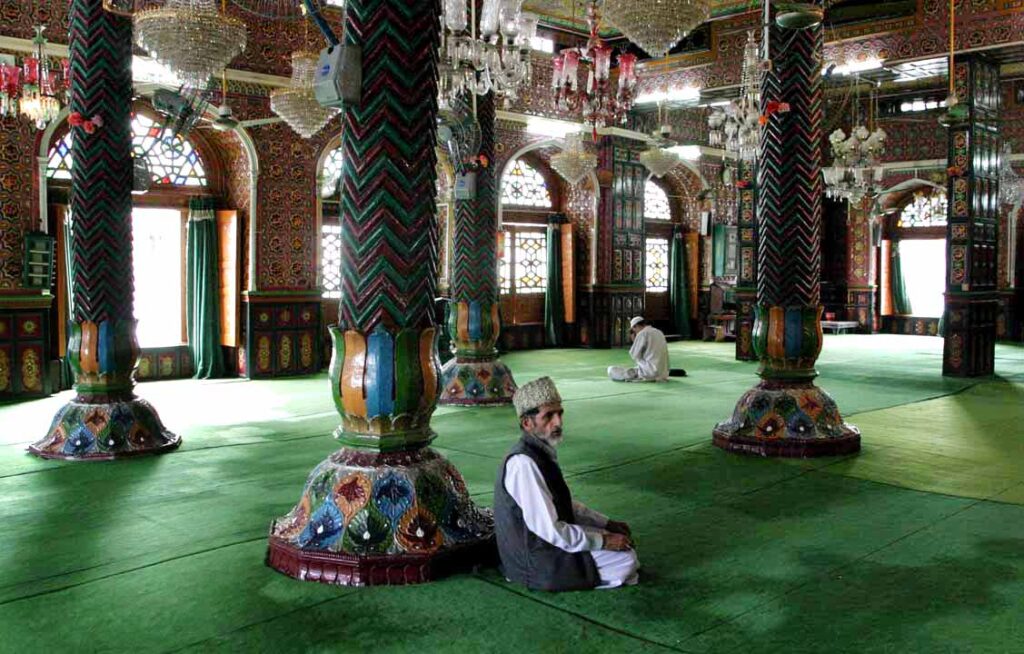
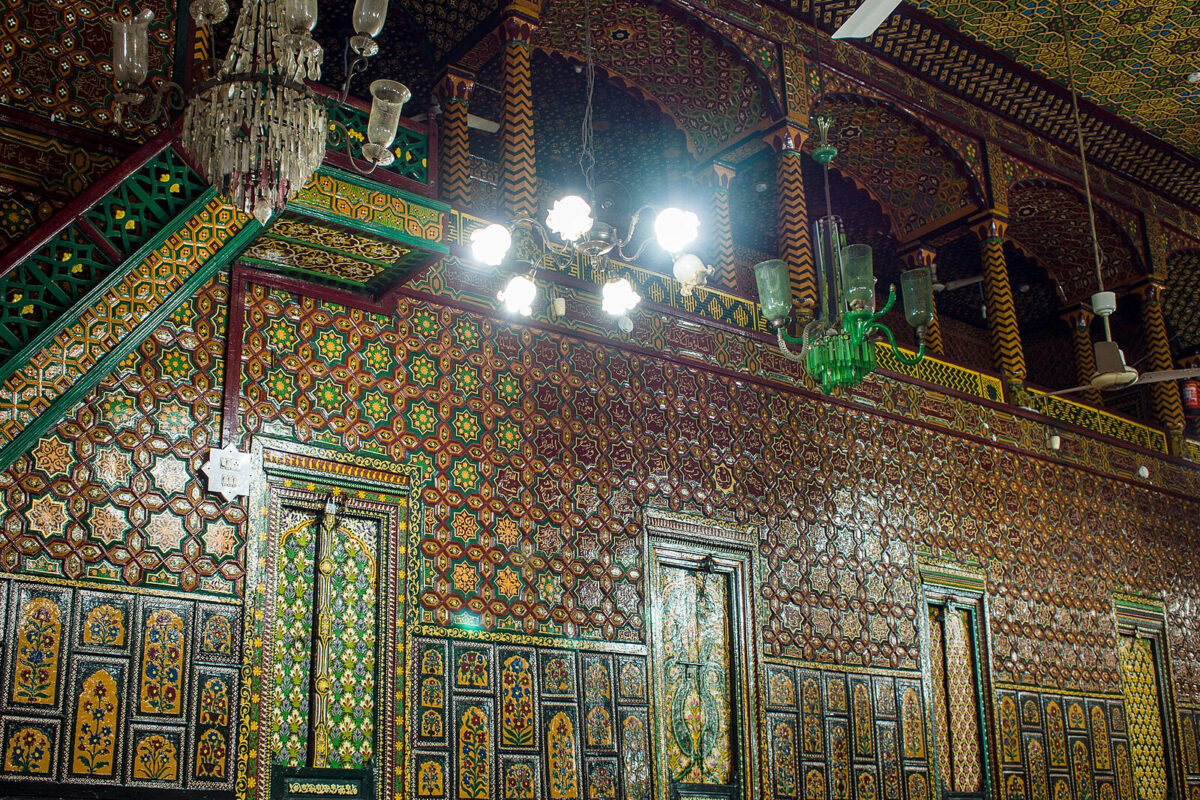
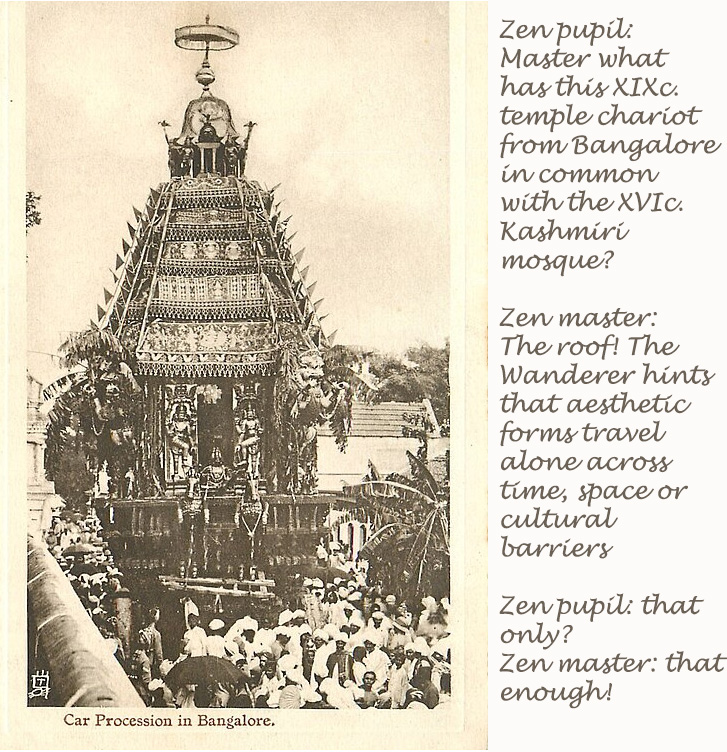
The Khanqah-e-Molla beyond being different of any another  mosque is a rare example of Indian cum Persian cultural intermingling. The ’embroidered’ woodwork ensemble composed of walls, columns, semicircular arched arcades, balconies, open-work panels, tiered spaces, flat ceilings, decorative corniches, the ‘pagoda’ like sloped tiered roofs and the triangular spire are of Indian origin. A comparison with an iconic Persian mosque (Yazd) build during the same time period reveals the noteworthy dissimilarity between two buildings sharing the same functionality.
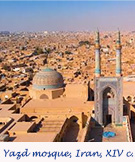 On the other hand the imposing mihrab (the muslim equivalent of the altar), the inspiring functionality of the praying space, the absence of flat or free standing figurative sculptures, (who needs those idols?), the essential location of the puny space under the spire, now a the muezzin’ cage (conceptually akin a DJ booth), and finally the fascinating optic fractal decoration upon composite panels, either lattices of painted wood or vibrating papier mâché polychrome surfaces, are Persian. Forget style, there’s some spirituality about the whole, isn’t there? Even if the mosque is…well, what I will say later!
The web continues to feed me with data about the sultan Sikander, the dude who built Khanqah on a bank of the Jehlum river for the elite and the big and bulgy Jamid Masjid within the city for the commoners. In his spare time he was also a big destroyer of Hindu temples and slayer of Hindu people! So what? Did you hear about Mahmud of Ghazni or Nadir Shah? They were real ‘liquidators’ Sir!
I refuse to record more suspect info about this waning and waxing mosque that isn’t…And then I heard a terrible thunder:
– Maledetto are you going to finish spinning the thread of this headless-endless hodge-podge story during my life time?
-Lord please, I need only one more word to finish the whole
-So, say it and get lost.
-This isn’t THAT ONE!
-THAT ONE what? Do you begin talking pidgin?”
– Lord, that isn’t Sikander’s Khanqah-e-Molla mosque! That is only an uncertified copy built circa 330 years after the original went up in flames more than once. Nobody on earth knows what it looked like. It is an illusion and a disillusion standing for something that disappeared centuries ago, like the torn jeans signifying nonconformism, the tattooing symbolizing identity, the short stubbly beard hinting at virility, and the fucking tourism claiming to be the experience! It is all Maya Lord, the whole world is Maya, even You….
-Shut up you stupid or i will smite you! Thanks God that nobody else heard your racist, anti-democratic and immigration skeptic rant. Otherwise, you should long since have been burned on stake. And he left!
It’s no wonder that we are in a mess with a die-hard leftist PRINCIPAL, committed to the POOR since the Big Bang (they are still poor the miserable), defender of the DEMOCRACY-IS-US-ONLY, running the show!
Sorry revered angel for making public the conflicting relation I have with the boss
Thank you again
The Wanderer
About Post Author
