
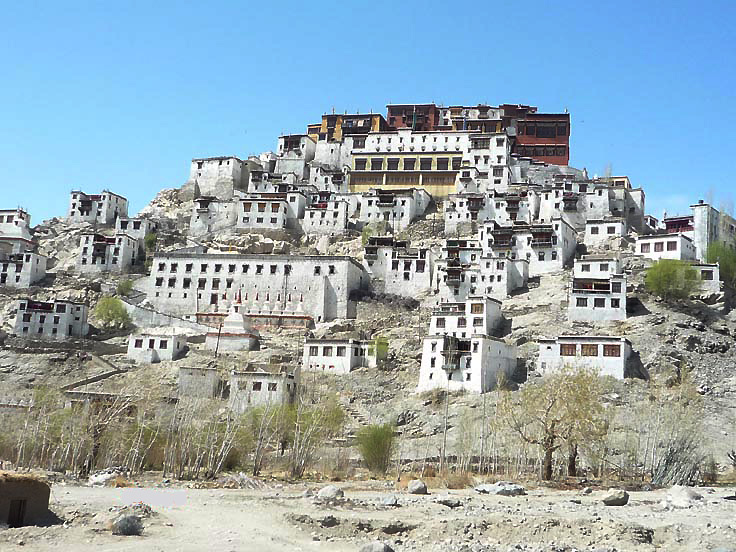
To Ladakh by Continuous Prayer, Part One
The asshole
One of my best friends is a total asshole. There’s nothing wrong with that; everyone has an asshole  friend, or is the asshole friend to someone else. How do you recognize one? It’s easy! Just look around you—or even at yourself. An asshole criticizes and scorns everything you bring him, from food to ideas and from fears to hopes. He speaks in a nasal, whiny tone, lectures you forever, and picks his nose while he’s talking.
So, when I showed him the latest thing I wrote—something I was really proud of—he immediately tore it to shreds with an insulting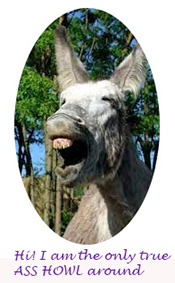 critique. “Your writing is too long and convoluted,” he said, “full of useless information, and stuffed with pretentious words from old dictionaries. You’re just going in circles and miss the point more than once.” That kind of slap is the absolute mark of an asshole.
The fucking bastard! What am I supposed to do? He’s a really good friend. And if most people are assholes—and they are—maybe I should change my approach. Not to get fame and fortune, but just to get a little bit of attention, which is as essential for a small-time creator like me as it is for a major, groundbreaking artist. You know, like the one who cut off his ear once. I should reform!
And Now at Leh
What a ride, man! Despite being two, we went like the Four Horsemen of the Apocalypse to meet the Hindus at the Maha Kumbh Mela, the Muslims in Kashmir https://on-death-row.com/years-ago-on-the-foothills-of-the-himalaya/, the Head Hunters(that is a religion, too) https://on-death-row.com/nagaland-balade-ardue-dans-le-pays-des-anciens-coupeurs-de-tetes/in Nagaland, and the Buddhists at Leh. For an initiatory, symbolic journey, you couldn’t find a better one, even if I only realized this 16 years later! Forced by the asshole’s vicious remarks, I decided to toss to the wolves my old-fashioned, manneristic way of reporting on briefly visited sites and cultures. Let’s forget that idiosyncratic cocktail of, I have to admit, slightly biased memories, endless free associations, and brazen, Munchausen-baron-kind inventions I used to pass off as travel notes.
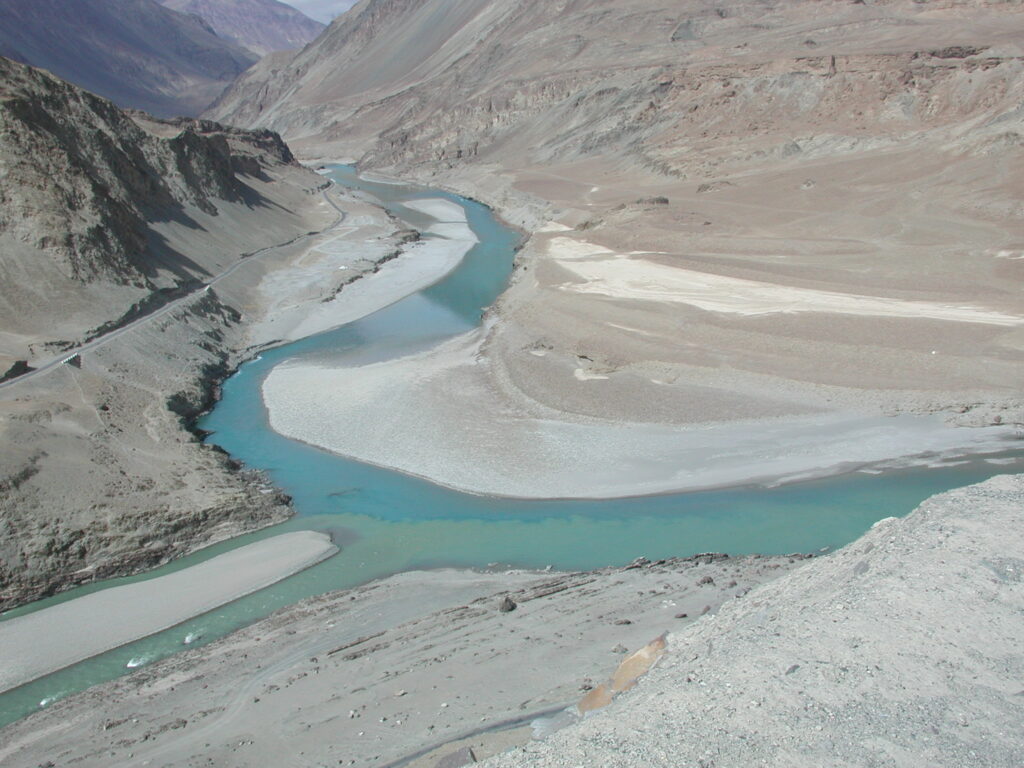 Ladakh proper
This time, just a list of views, encounters, and fragments of experience from ineffable Ladakh—the distilled zest of what Lothar and I managed to grasp during our ridiculously short stay.
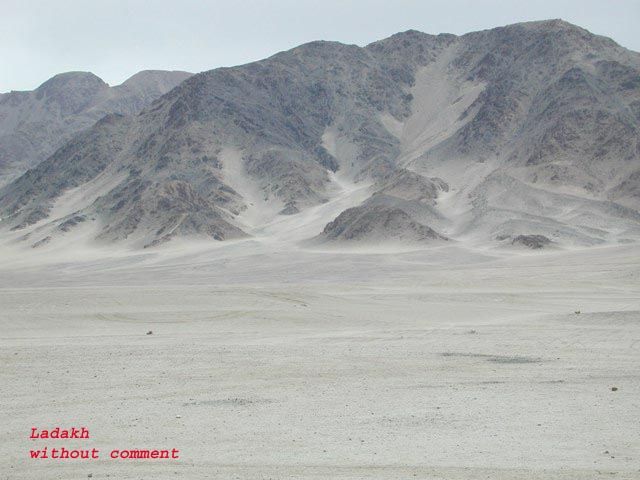
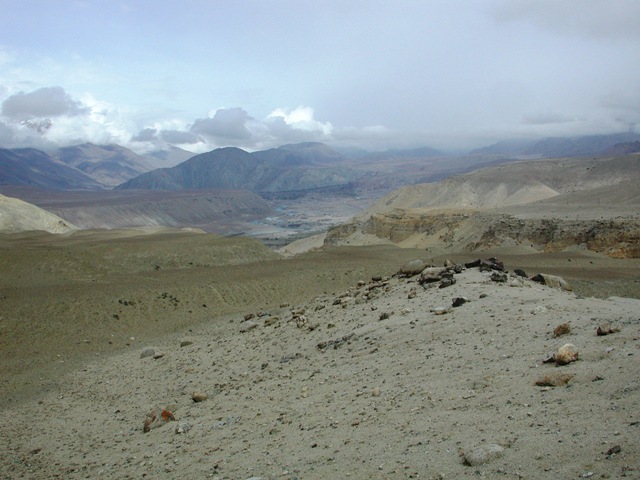
The scenery of this newly minted Indian Union Territory is flagrantly dramatic: snowcapped mountain ranges bordering turquoise alpine lakes, rugged high peaks standing by themselves, hidden narrow valleys wrapped in shadows and neck-breaking paths more worthy for goats than for human feet. Personally, I give the prize to the high-altitude rocky deserts where a contemplative can enjoy the plenitude of emptiness. Their vocational appeal is undeniable: be there and become a monk!
Better if you’re a Tibetan, of course. Ladakh was called “Little Tibet”  or “Free Tibet” (by me) since the Han “liberated” the motherland. The population here is a mix: ancient of Tibetan tribes who migrated here centuries ago, a majority of invasive Muslims who moved in from the XIV to XVII centuries through proselytism and war, a handful of Hindus to bring some flavor, and some minuscule ethnic groups like the Brokpa, allegedly the last Aryans. Their claim of being pure-blood stock and their romantic location—a valley that is both a fortress and a prison—encouraged many women, Frauen und Fräulein, eager to birth a new Siegfried, to hit the area and give it a try. I don’t give a fuck; I am a Semitic bloke.
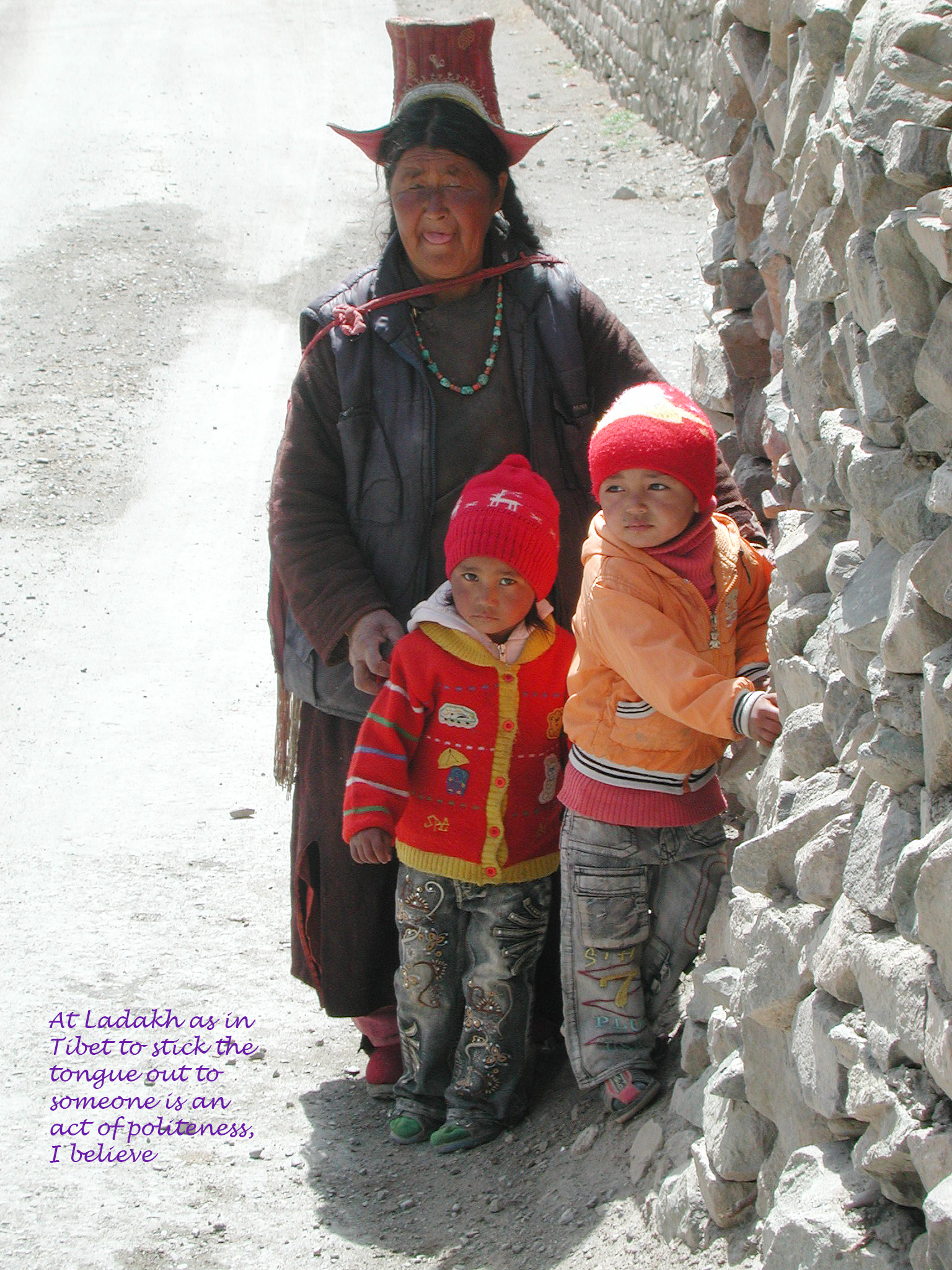
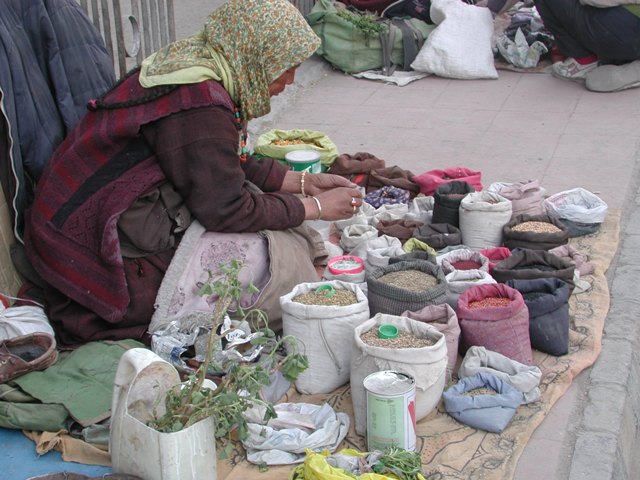
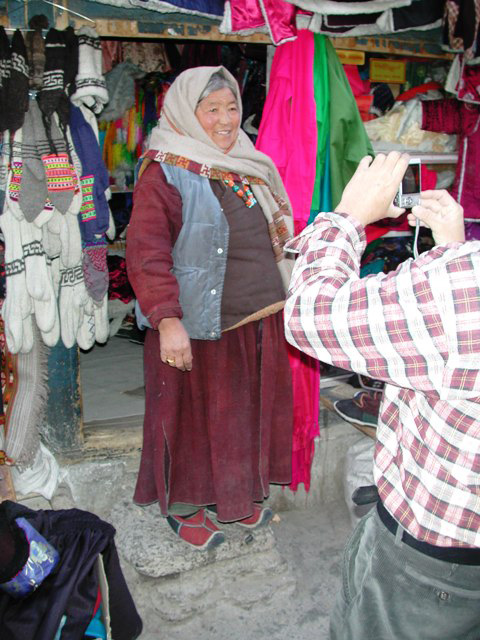
The Ladakhi looks yellowish, a much more saturated hue than mine, which is that of a regular oldie. They fancy round heads, bottoms and bellies, and show stocky rounded thighs within a solid and coherent couperose adds another brushstroke to their chromatic palette, despite their best efforts. They are serious folk, even if they flash a smile from time to time—fervent devotees, and quite reluctant to sell anything at a discount. Wrapped in layers of wool fabrics (mandatory in this deep-freezing winter country) that cling to their bodies like second skins, wear funny shoes with up-curled tips and no less amusing cylindrical caps with utterly useless earflaps.
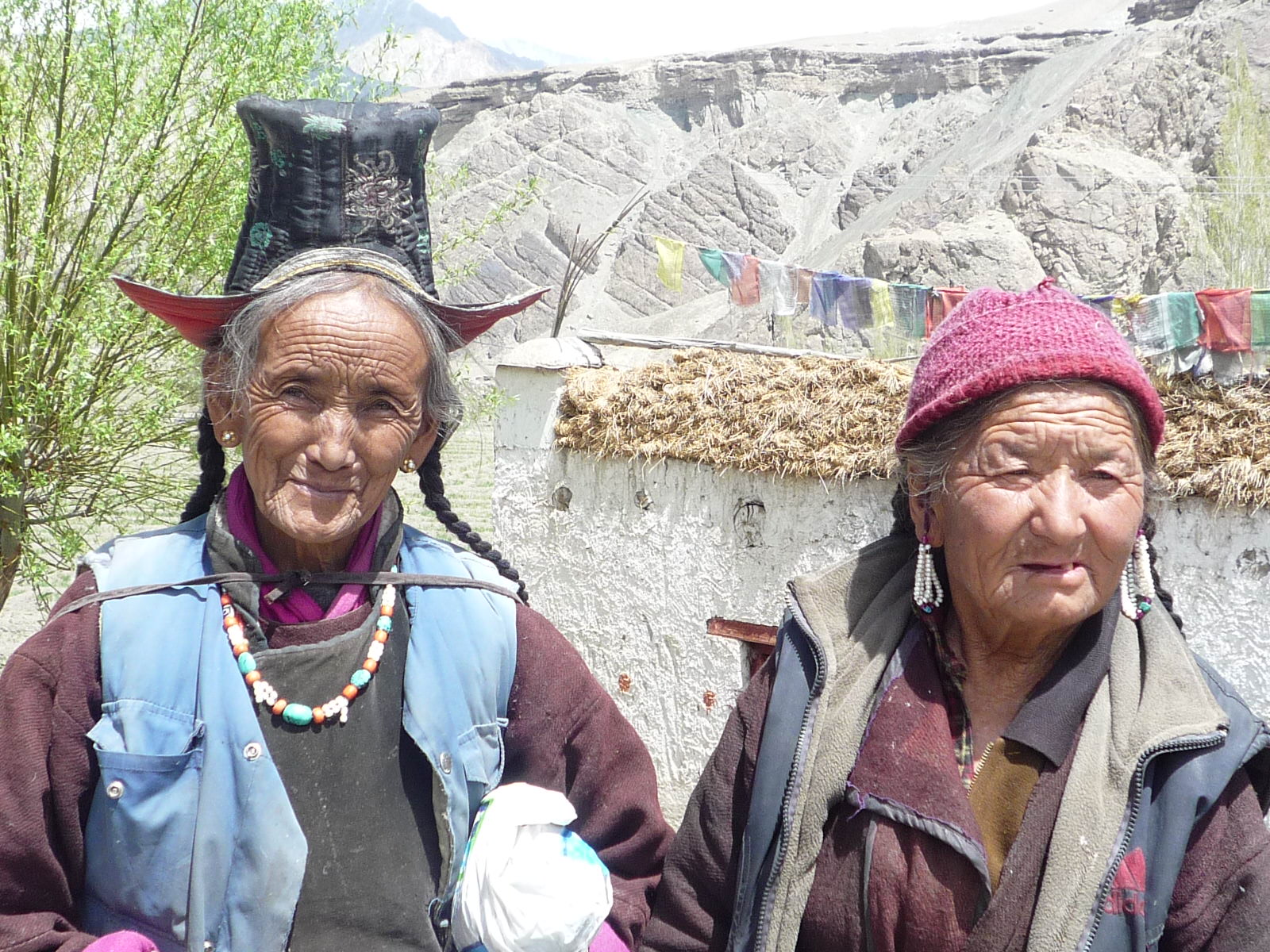
Zen master (on a doctoral tone): If the outfit for daily use is particularly modest and monochrome, even tedious—as you can see on Lothar here, (not that it’s his fault, particularly)—the Ladakhis, anytime they have an occasion at hand, transform, in peacock-like, baroque, gaudy fashion, 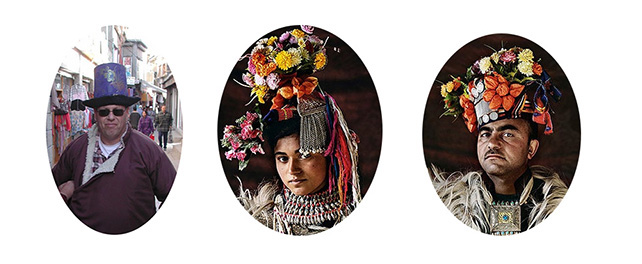 designers and wearers of a jazzy dress such as this floral chapeau, which seems to have been conceived by nobody else than the great Arcimboldo.
Zen novice (eager to participate): But, Master, where did they get those flowers in a country so cold and windy? Zen master (annoyed): From Holland, boy; from Holland, like everybody else. Zen novice (reluctant to give up): It’s very puzzling, Master, that the headdresses of the two beautiful ladies are quasi-identical. Zen master (harsh): Ignorance sees mysteries everywhere. Also, you’re getting into the mundane. The second couple are Dards, another Indo-Aryan group, close relatives of the Brokpa. Zen novice (wistfully): How wonderful! Another pure-blood  stock! Zen Master (angry for good): I will trash you soundly if you continue to speak in equine terms. That can be very offensive for the animal too!
Cultural festivals
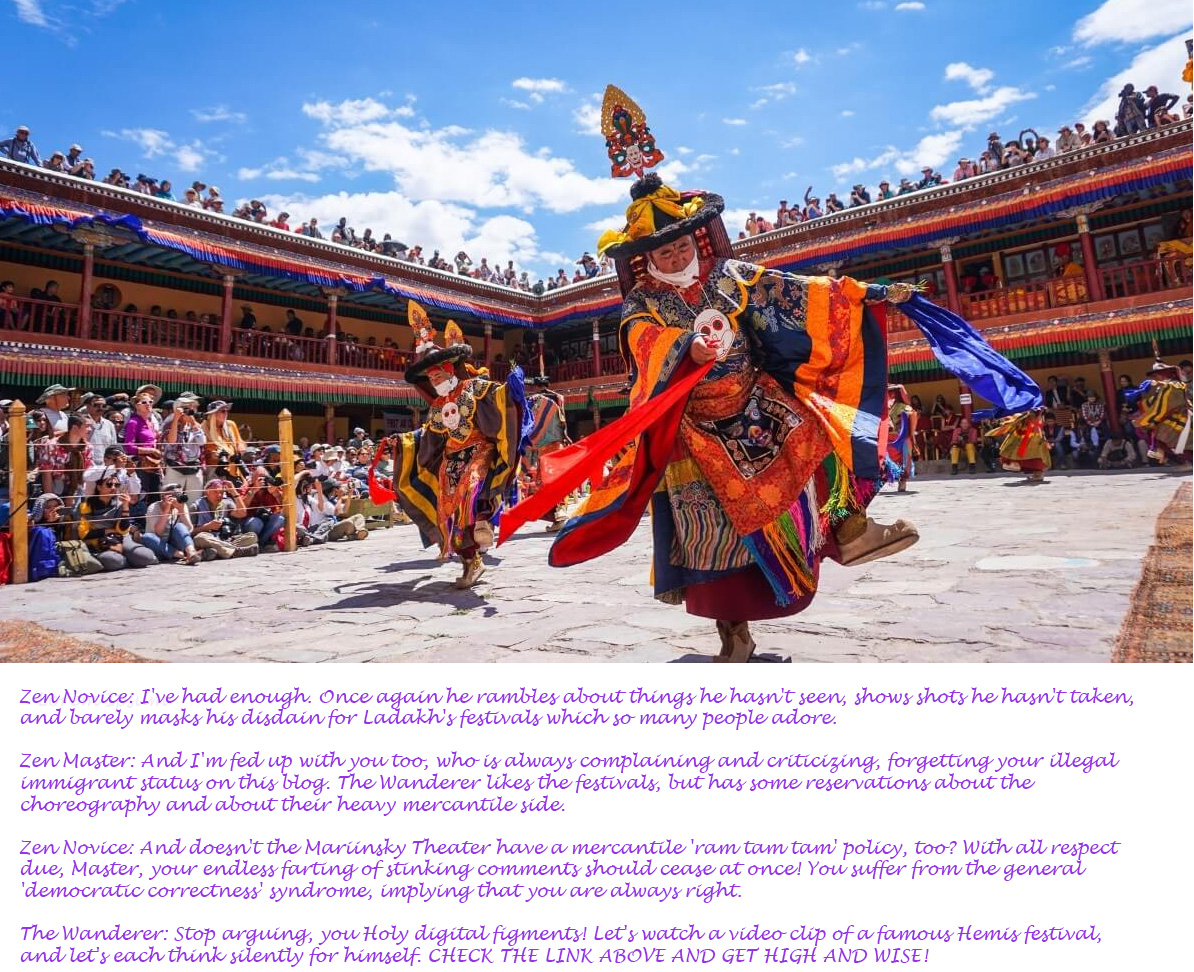
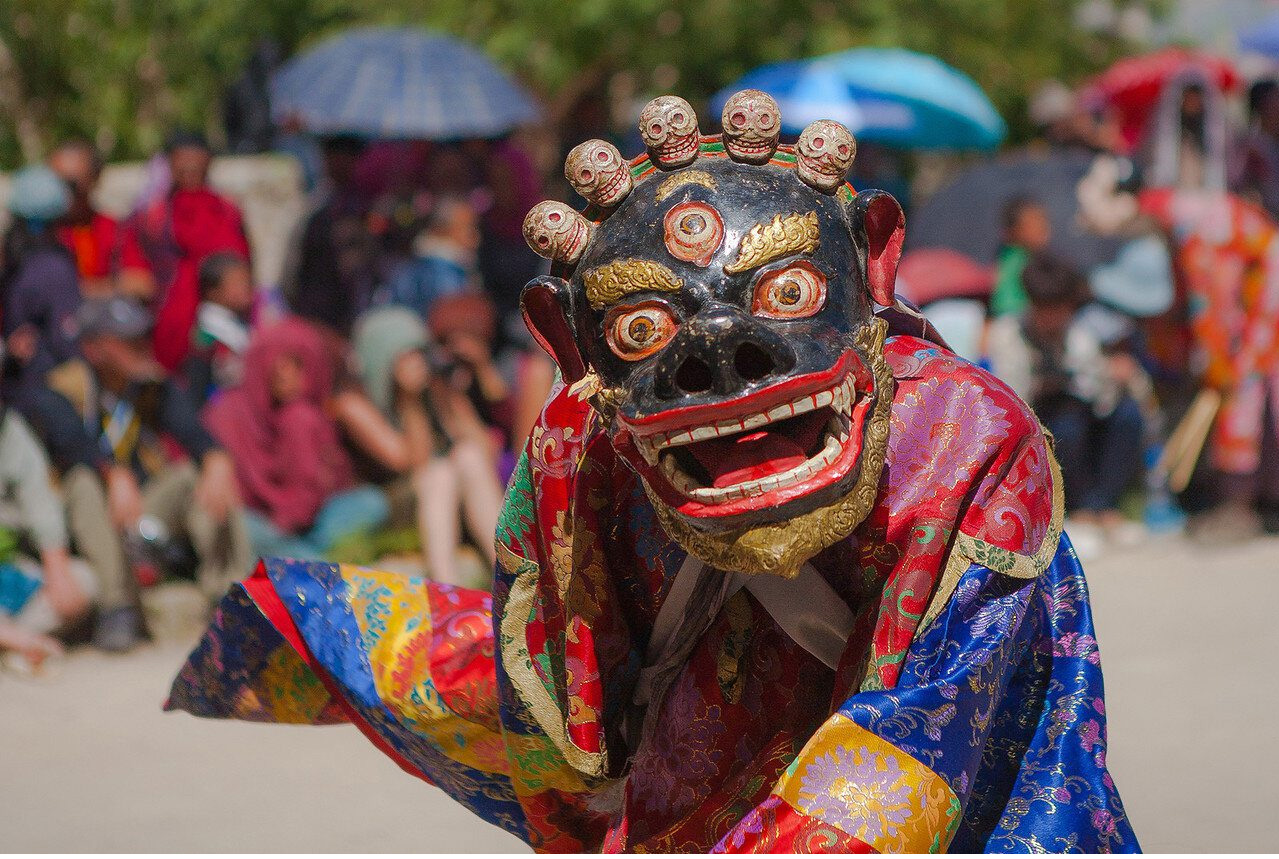
One of the main reasons for the world’s interest in Ladakh is the strong, visual and emotional pull of its religious/ritualistic festivals organized by the leading lamaseries. Their artistic and conceptual complexity—combining dance, costume, music, and stage effects—has a fascinating impact upon both visitors and locals. The attendees feel and enjoy being simultaneously in touch with the living faith and timeless tradition, which makes a trip to Ladakh more an act of experience than a simple visit. https://www.youtube.com/watch?v=IJfx8eBRSi4&t=1s
Food
Just before I forget. Do you want to run a marathon or two without wrecking your nerves and legs in masochistic training? Try some of Ladakh’s famous dishes like Thukpa or Chhutagi, which are spicy, heavy thick soups with local pasta, vegetables, and sometimes shredded meat that fills the stomach, warms the heart, and motivates the limbs. You’ll feel like someone who was purposely created to climb into the clouds, either by the power of his calves, the determination of his faith, or both.
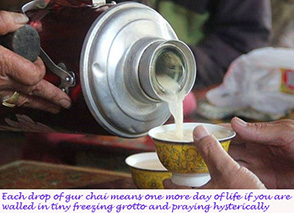 And if you care for a drink—and you should—try the precious barley beer Chhang or get a fair amount of butter tea gur chai, the icon of local cookery. At the end, should you have strong teeth, it will be wise to gnaw on a piece of dry Chhurpe yak cheese. Don’t hesitate to thank i
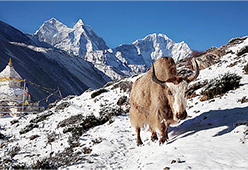 n petto this stout, strong, and hairy Himalayan bovine who provides the locals with quite everything they need for life, including a mighty kick from time to time to remind them of respect and gratitude.
May I trust you with an ugly secret? Because this Lothar bandit, who is madly in love with ethnicity but obsessively avoids trying any of its gastronomic summits on his dead body, I didn’t taste any of the stupendous culinary creations mentioned above. I wish—since we are in a Buddhist territory of endemic rebirth—that he returns to Earth in the frame of a skinny, undersized, mild-minded yak. Fair enough.
Stupas
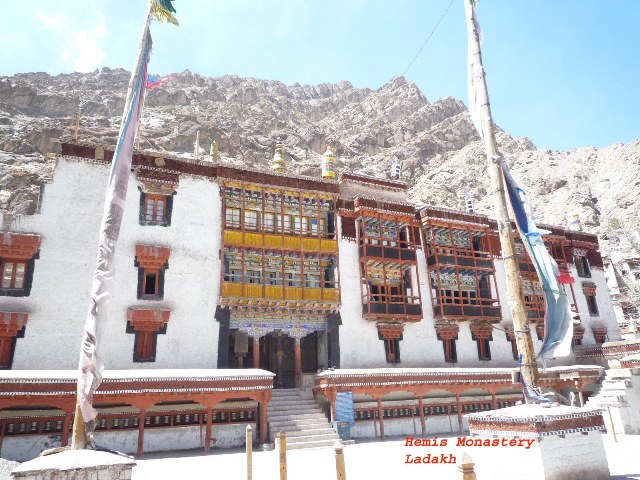
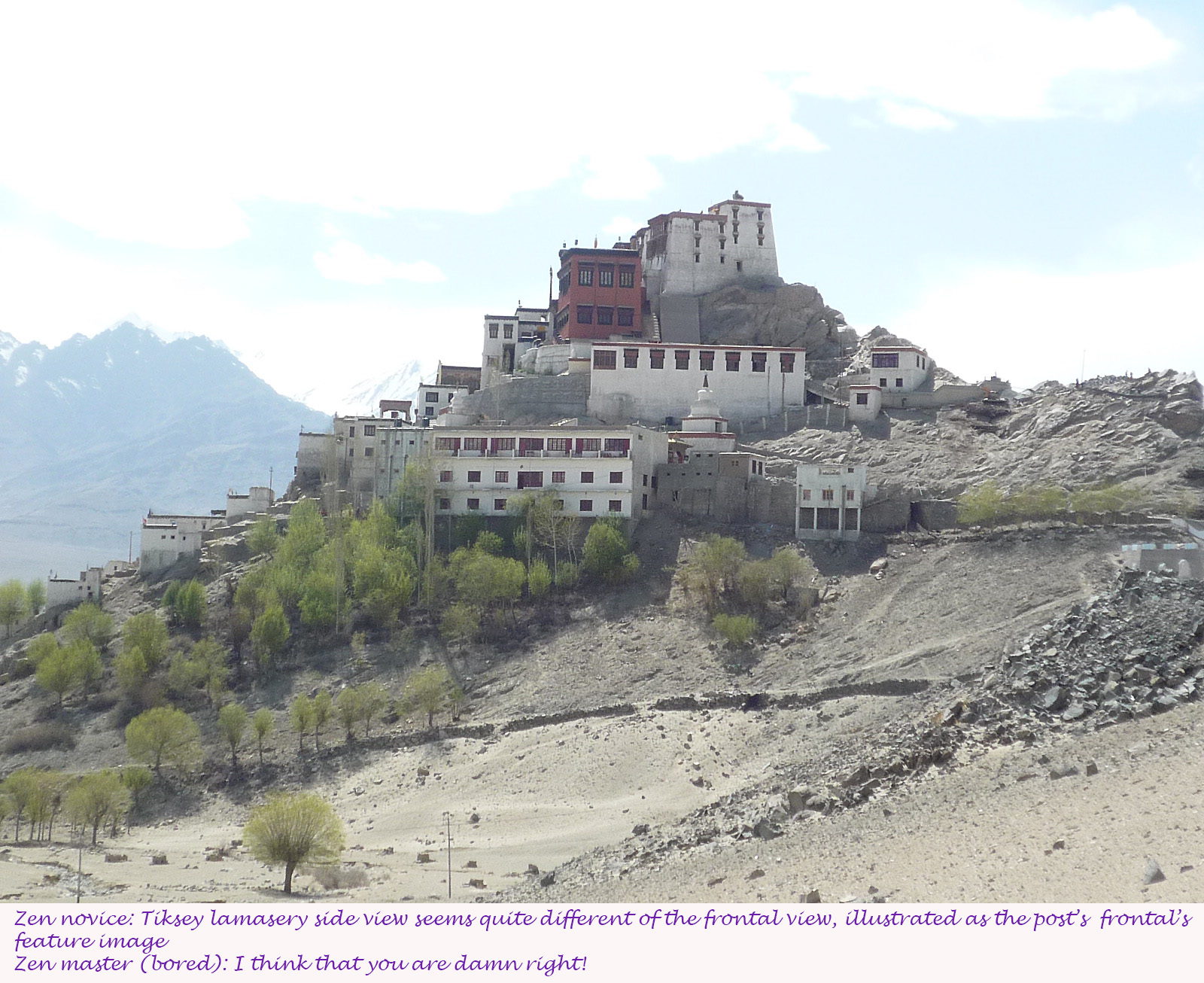
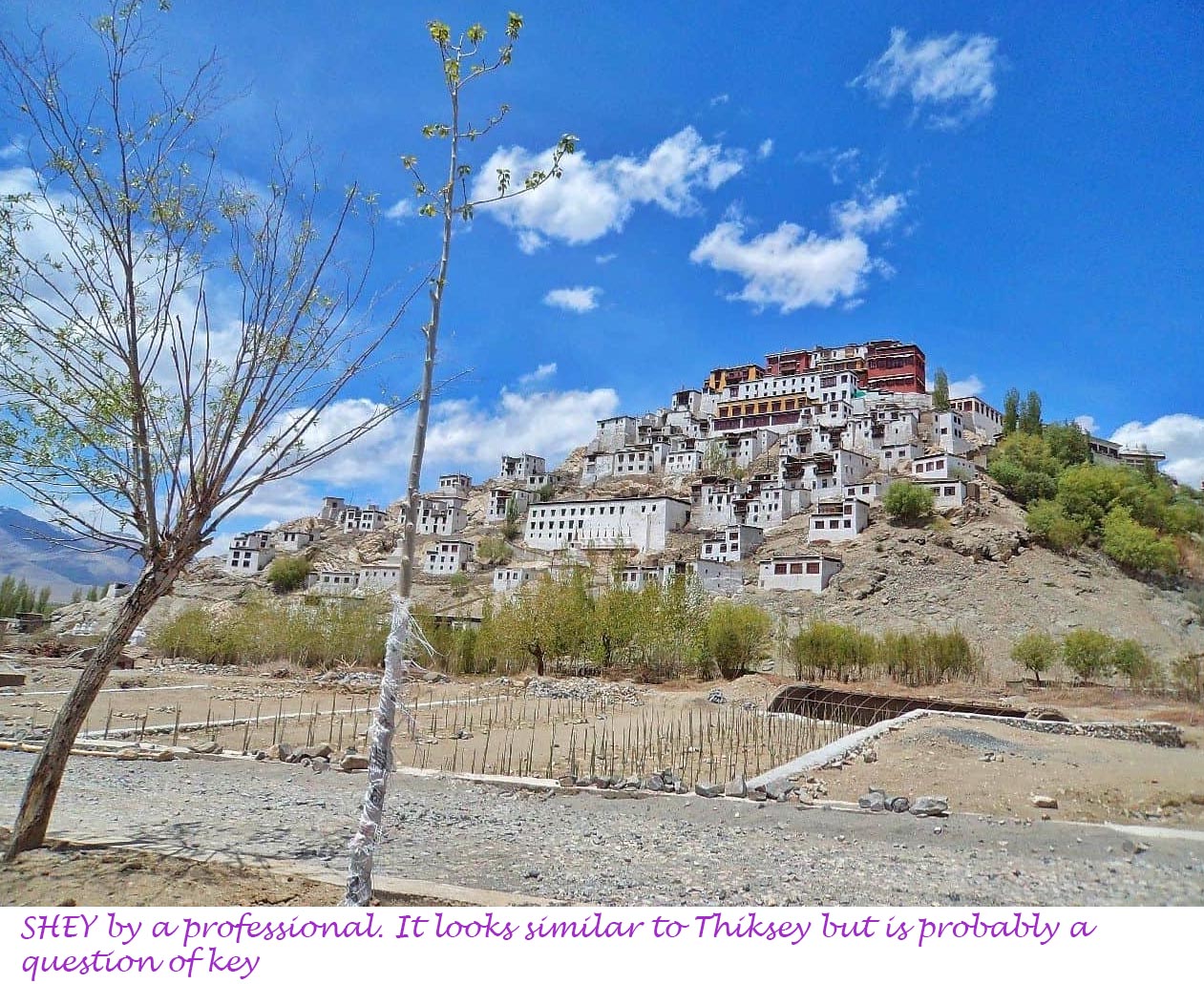
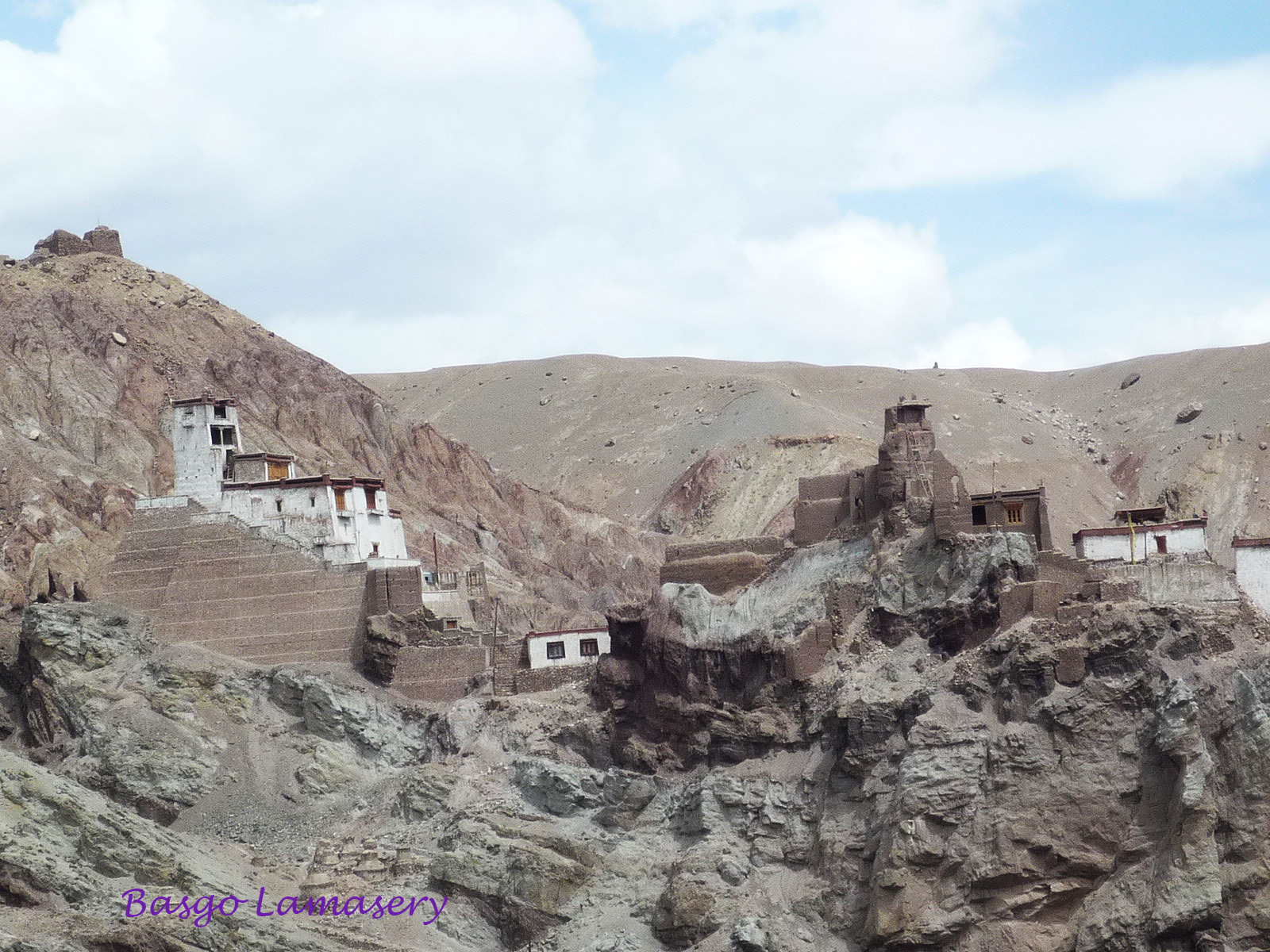
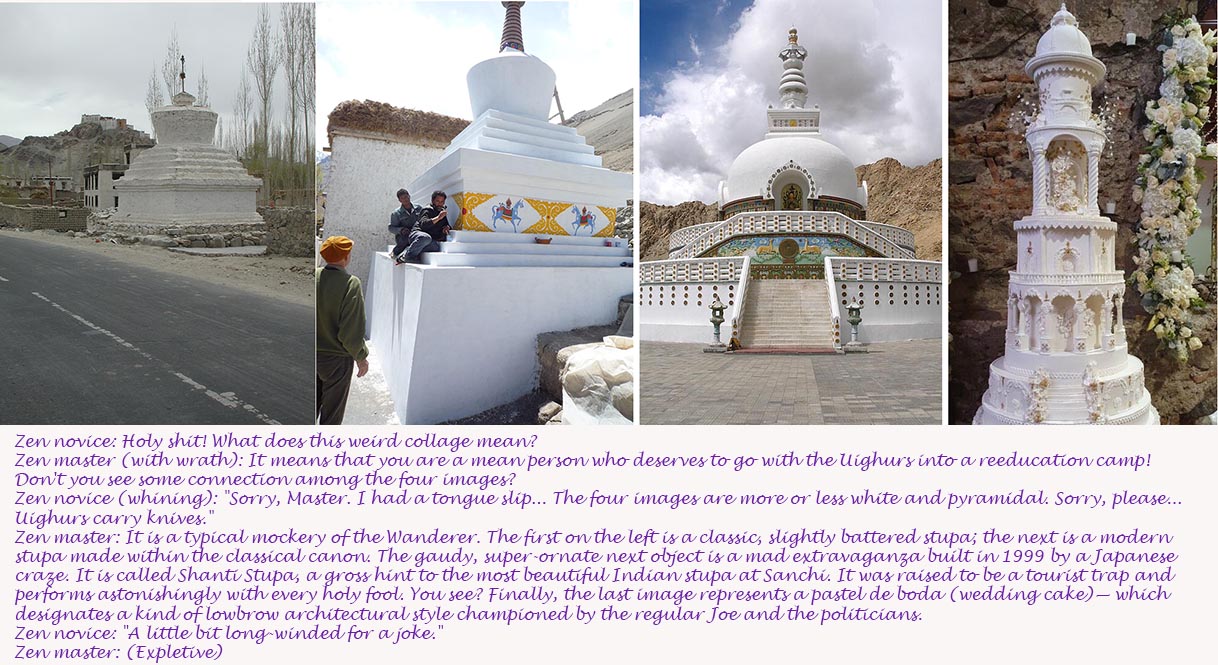
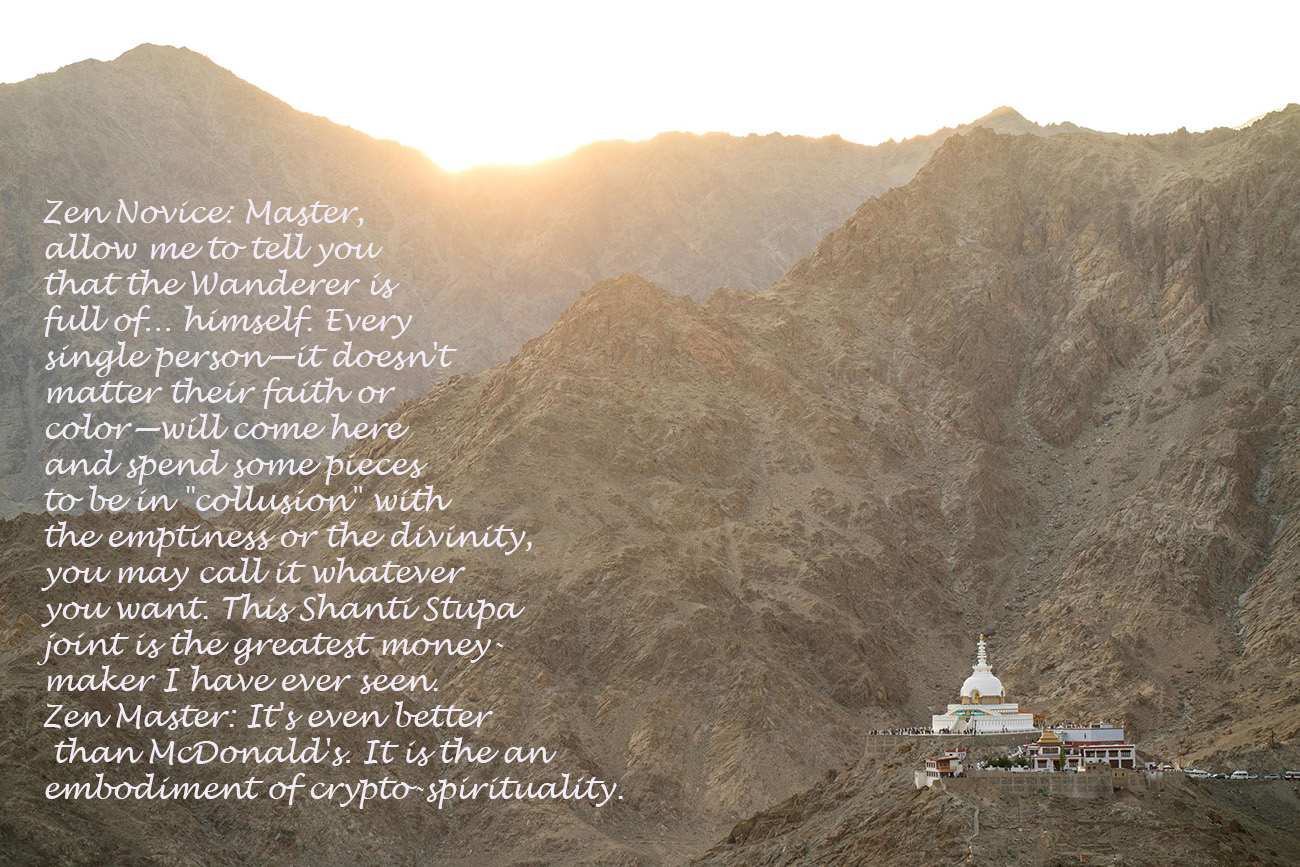
Among the man-made things in Ladakh, two have roused my interest to zenith: the stupas and the 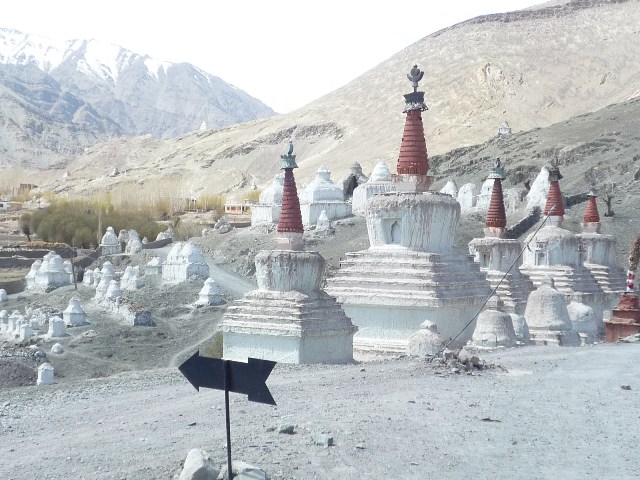 lamaseries.During our chaotic visit, I noticed a multitude of stupas (chorten), the Buddhist religious monument par excellence that serves as a reliquary and/or a cultic focal point. It offers the believer a fixed point for meditation, or for a ritual clockwise circumambulation. Their form varies greatly by location. The stupas raised in clusters near lamaseries or in sacred places are imposing, standard creations consisting of a polygonal base, topped by a full, dome-like element, surmounted by a painted spire, and ending in a parasol, lotus flower, or a pinnacle. While new stupas can be lavishly decorated, it’s often the old, worn ones that draw the eye, thanks to the subtle marks of time known as patina. It’s almost the opposite of what happens with people, isn’t it?”
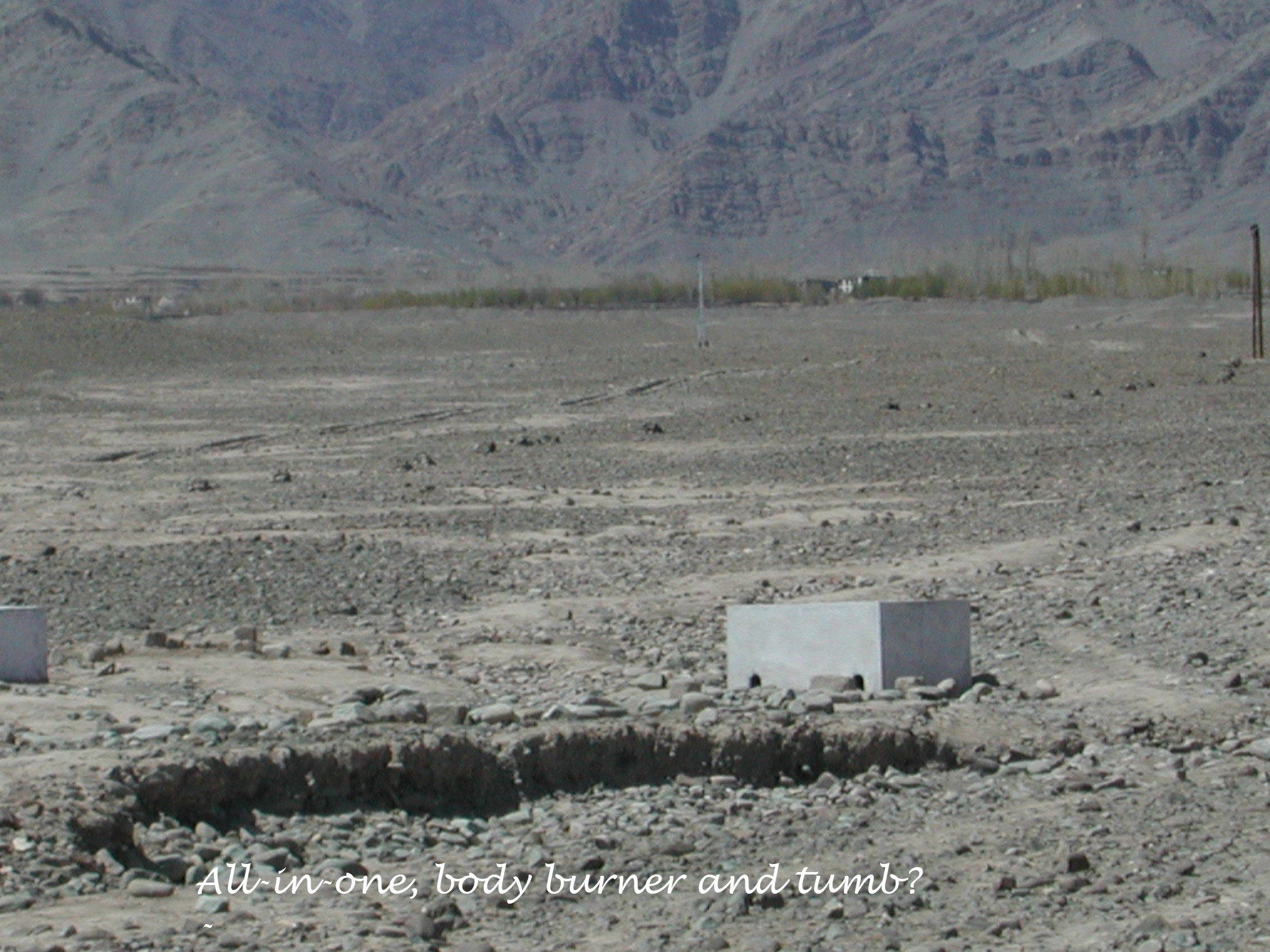
The stupas irregularly scattered in the vast emptiness surrounding Leh, probably older and worn, dressed in a grayish-white robe, have a dome surmounted by a small pyramidal element ending in a short metal shank, as a kind of makeshift spire. Their matter and coating reminded me the guano heaps I’d seen near Ancón in Peru. I nearly convinced myself they were fossilized flying dinosaur droppings but mercifully avoided to make public that idiocy and pass for a perfect fool.
All the stupas are epitomes of material spirituality. Each segment 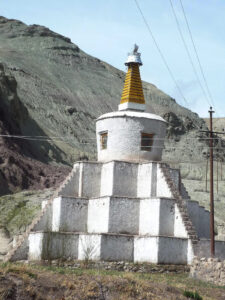 from base to top symbolizes another Buddhist elementary entity such as earth, water, fire, air, and ether. The simple act of building one is an act of devotion, deserving praise and sometimes bringing a divine reward (boon) to the builder.
As we go, and as I consider the other issues I intend to tackle, I realize I will end up with a questionable, spiritualistic, even devout document that is completely out of character for someone who cares little for either the Devil or the Almighty. The world is in deep shit, and will soon (in a historical sense) be in shambles. It is true that from time to time I have spirited conversations with the Principal, but that is very personal and unrelated to my worldview (Weltanschauung). It occurs to me that this very wrong path, which I am pursuing with the arrogance of a Mongol centaur, was taken under the nefarious influence of the asshole—who, as everybody knows, is a pious character par excellence. Whatever the result, it is too late to change course. Come what may.
One last word, for I feel compelled to slip free from the didactic tone that has clung to me like white on 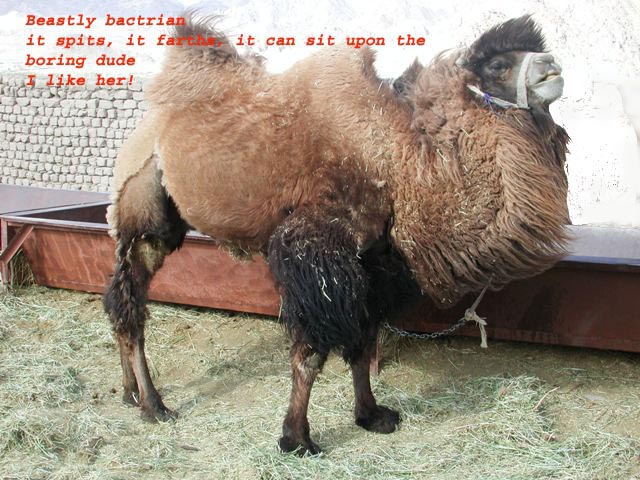 rice throughout this report.I’ve always loved camelids, wherever chance allowed me to meet them—from
the windswept Peruvian altiplano to a bustling animal market in the Middle East. But here in Ladakh, this Bactrian camel, radiating barely hidden distrust in every direction, has utterly won my heart. I heard him ruminating: “Naked apes with two tongues and two hearts, always eager to put one on the right way with mighty kicks. Today they are monitoring the language; tomorrow they will control the minds—even the mind of simple me, I, an animal!” What a pity that so few people are hearing voices!
Spaces, Masses and Peoples
About Post Author
